
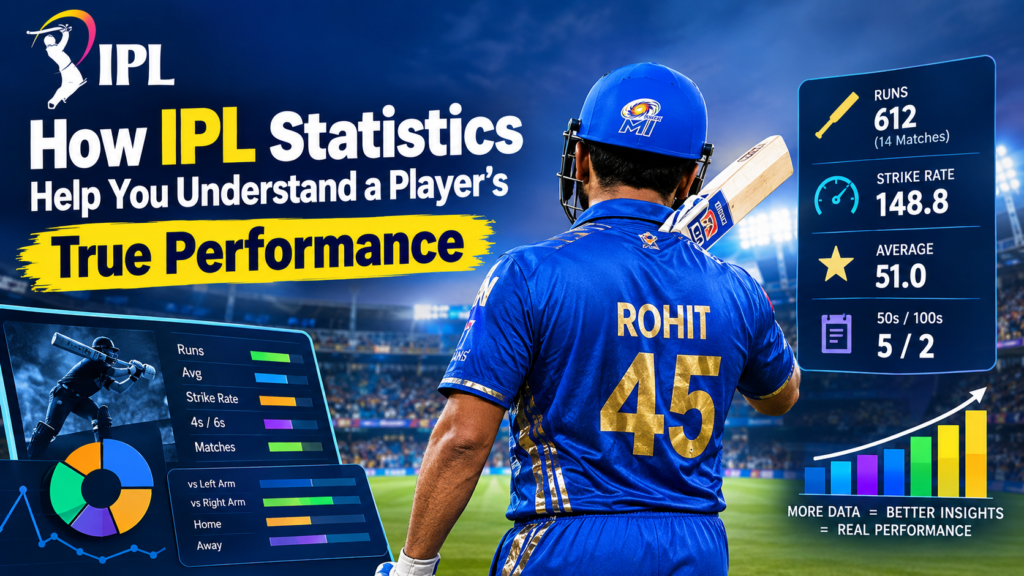
How IPL Statistics Help You Understand a Player’s True Performance
Watching an IPL match is exciting, but understanding a player’s real contribution often requires looking beyond the scoreboard. A batter may score a quick 40, while another makes a slower 60. A bowler may take three wickets but concede many runs. So, who actually performed better? This is where IPL statistics become valuable. Statistics provide a more complete picture of how players perform over multiple matches and situations. Instead of judging a player based on one memorable innings or spell, fans can use numbers such as runs, batting average, strike rate, wickets, bowling average and economy rate to understand consistency and impact. For fans who also enjoy exploring online entertainment during cricket season, tamasha live casino website can be another digital entertainment option. Why IPL Statistics Matter The IPL is a fast-paced T20 competition where a player’s role can change depending on the match situation. A middle-order batter, for example, may not face enough deliveries to score a large number of runs but could still make a crucial contribution with a high strike rate. Similarly, a bowler who regularly delivers economical spells may be extremely valuable even when they do not take multiple wickets every match. The most useful statistics include: IPL-focused statistics sites commonly organize player profiles around these kinds of numbers, making it easier to compare performances across seasons and formats. Batting Average Shows Consistency One of the most familiar batting statistics is batting average. In simple terms, a batter’s average indicates how many runs they score per dismissal. A higher average generally suggests greater consistency, although it should never be considered in isolation. For example, two players may have similar total runs, but one could have scored those runs in fewer innings or remained not out more often. When evaluating a batter, consider average alongside: Looking at several statistics together gives a much clearer picture than focusing on one number. Strike Rate Shows Scoring Speed Strike rate is particularly important in T20 cricket. A batter’s strike rate indicates how quickly they score runs. Since IPL innings are limited to 20 overs, scoring quickly can have a major influence on the team’s final total. Imagine two batters: Player A: 60 runs from 50 ballsPlayer B: 60 runs from 30 balls Both have scored 60, but Player B has scored at a significantly faster rate and may have provided greater value in a T20 situation. However, an extremely high strike rate does not automatically mean a player is better. Aggressive batting can also increase the risk of losing wickets. The best analysis considers strike rate together with average, consistency and the player’s role. Runs Alone Don’t Tell the Whole Story Total runs are an important measure, but context matters. A player scoring 400 runs in a season is impressive, but understanding when those runs came can make the assessment more meaningful. For example, a batter who repeatedly scores during successful chases may have a different impact from someone who accumulates runs when the team is already comfortably ahead. Match scorecards can help fans examine individual performances in context, including runs, strike rates and the circumstances of a particular innings. IPL statistics resources also maintain scorecards and player profiles for this purpose. Bowling Statistics Reveal More Than Wickets Wickets are usually the first number fans look at when evaluating a bowler. But wickets alone do not tell the complete story. Economy rate is especially important in T20 cricket because bowlers have a limited number of overs. A bowler who consistently restricts the opposition’s scoring can put pressure on batters even without taking several wickets. Other useful bowling statistics include: A bowler who takes important wickets while maintaining a low economy rate can be extremely valuable to a team. Venue and Match Conditions Matter Player statistics can also change depending on the venue. Some grounds traditionally offer better conditions for batting, while others may provide assistance to spin or pace bowling. As a result, a player’s overall numbers may not tell the complete story. Looking at venue-specific records can reveal interesting patterns. For example, IPL stadium statistics can include average first-innings scores, individual batting records, bowling records and successful-chase figures. This helps fans understand whether a player’s performance is consistent across different conditions. Recent Form vs Career Numbers Career statistics provide a valuable long-term picture, but recent form is also important. A player might have excellent career numbers but struggle during the current season. Another younger player might have limited career statistics but has been producing outstanding performances recently. A balanced assessment should therefore consider: Career record + recent form + role + match situation + opposition This approach provides a more realistic understanding of a player’s current value. Compare Players Fairly Statistics are particularly useful when comparing players, but comparisons should always account for their roles. Comparing an opening batter directly with a lower-order finisher may not be fair because they face very different match situations. Similarly, a Powerplay bowler and a death-overs specialist have different responsibilities. Instead of asking, “Who has more runs?” consider questions such as: Final Thoughts IPL statistics turn cricket from a game of impressions into a deeper story of performance. They help fans understand not just what a player did, but also how consistently, how quickly and under what circumstances they contributed. Runs, wickets, averages and strike rates are useful starting points, but the best analysis combines multiple statistics with match context. The next time you watch an IPL game, don’t look only at the final score. Take a closer look at the numbers behind each performance. You may discover that the player who made the biggest impact wasn’t always the one who scored the most runs or took the most wickets.