
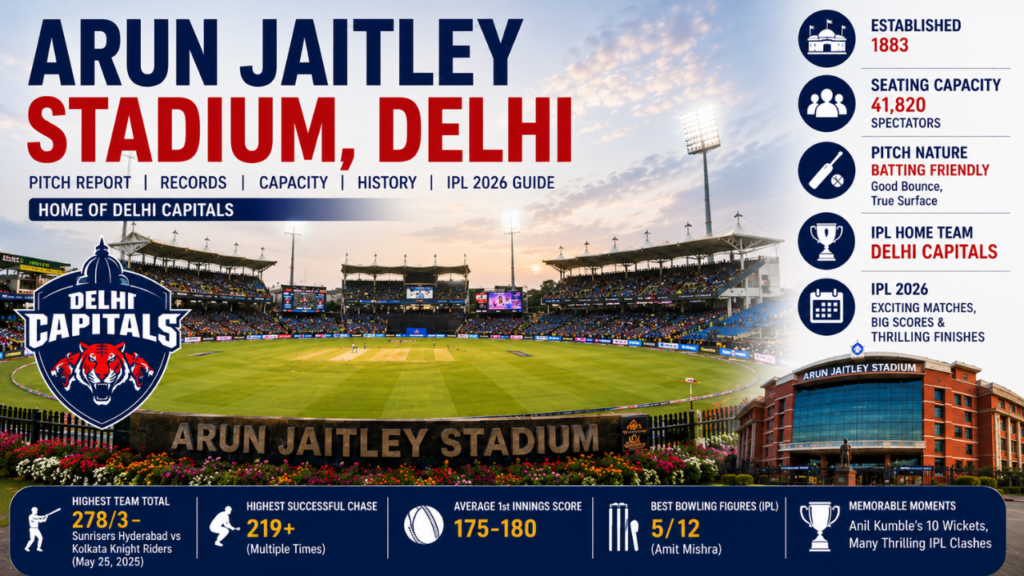
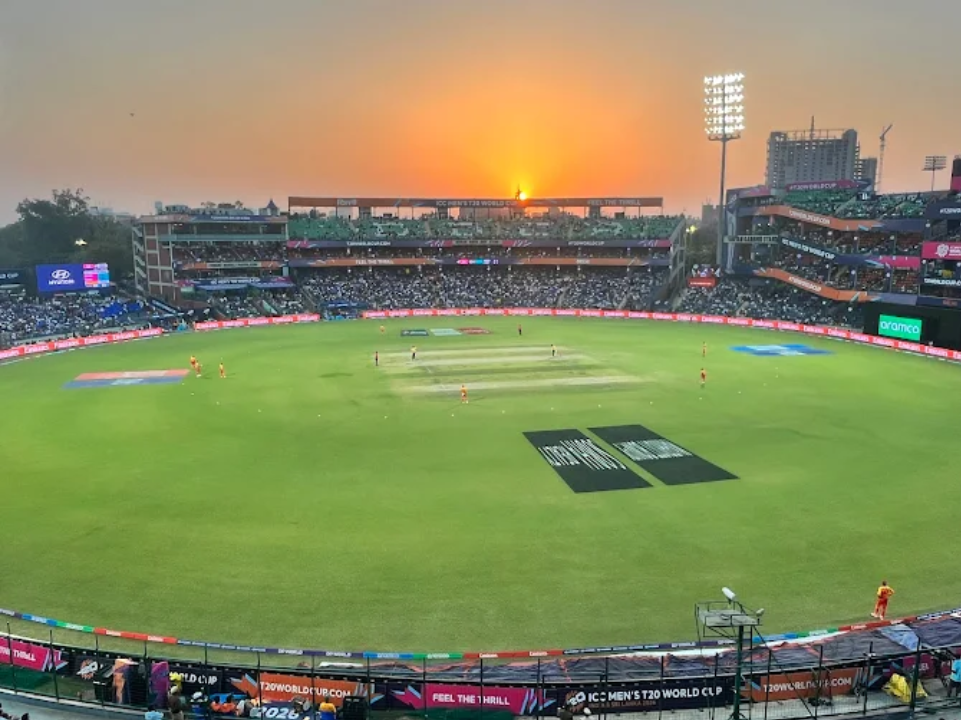
Something about Arun Jaitley Stadium makes it different from every other cricketing ground in India. That is not the biggest ground – Narendra Modi Stadium in Ahmedabad wears that crown with ease. It is not the most visually arresting; that title belongs to the Dhauladhar peaks looming behind Dharamshala’s HPCA Stadium. What Arun Jaitley Stadium does have is history, the breadth, depth, and multi-generational cricketing history dating to 1883 that makes it one of the oldest active international cricket grounds in the world.
The heart of cricket in Delhi, formerly the Feroz Shah Kotla Ground before being renamed in 2019 after one-time finance minister and BJP stalwart Arun Jaitley, is home to the IPL franchise Delhi Capitals, where Anil Kumble took all ten wickets in an innings, where Virender Sehwag played many explosive knocks, and with a century and a half of its presence at every match. A complete 2026 guide to Arun Jaitley Stadium, including history, pitch report, records in all formats, IPL 2026 stats, and toss trends, all you need to know.
Arun Jaitley Stadium – Quick Overview
| Attribute | Details |
| Full Name | Arun Jaitley Cricket Stadium |
| Former Name | Feroz Shah Kotla Stadium |
| Named After | Arun Jaitley (Former Union Finance Minister) |
| Location | Bahadur Shah Zafar Marg, New Delhi, India |
| Established | 1883 |
| Seating Capacity | 41,820 |
| Managed By | Delhi & District Cricket Association (DDCA) |
| Home Team (IPL) | Delhi Capitals |
| Bowling Ends | Pavilion End, Stadium End |
| Pitch Type | Dry, spin-friendly; batting-friendly early |
| Floodlights | Yes |
| Formats Hosted | Test, ODI, T20I, IPL, First-Class |
| Nearest Metro | Delhi Gate Metro Station |
140 Years Of History On The Ground
Officially opened in 1883, the Arun Jaitley Stadium is located on the banks of the Yamuna, giving it one of the oldest grounds still used regularly for first-class and international matches on Earth. The venue was first developed by the Delhi & District Cricket Association and hosted its inaugural Test in 1948-49, when India played its inaugural Test season as an independent nation against the touring West Indies. That Test is still woven into the fabric of what this ground is all about.
On September 7, 2019, it was christened in a ceremony that encapsulated the human bond between its most devoted caretaker and the site itself. Jaitley was president of the DDCA for many years and oversaw the modernisation of the infrastructure at the stadium, including floodlights that made day-night cricket at the ground possible. The tribute in name not only seemed fair but was also warmly welcomed in the cricketing community of Delhi.
The Arun Jaitley Stadium, which was renovated with an eye to the 2023 ICC Men’s ODI World Cup, has seen significant improvements – better drainage, new stands, upgraded media facilities, and revamped pitch preparation areas – making it one of the smarter updated venues on the Indian cricket circuit, given its age.
Also Read: Wankhede Stadium | M. Chinnaswamy Stadium
Arun Jaitley Stadium Pitch Report 2026
This surface is one of the most tactically interesting pitches in Indian cricket. It isn’t uniformly the same throughout an entire match; it changes character as a game progresses, which is exactly why it can be so difficult to write strategies for.
The surface is indeed good for batting in the initial hours of any format. The bounce is real, the pace moderate, and when batters get in, it feels as though a range of shots are on offer. The surface, however, dries out and deteriorates, especially after the second innings in T20s and from Day 3 in Tests. The dry air of Delhi hastens the wearing away of even a pitch, and once the surface begins to turn, it becomes particularly gratifying for finger spinners.
| Pitch Factor | Behaviour |
| Batting (Early) | Good carry, true bounce, free-scoring |
| Batting (Late) | Slower, inconsistent bounce, difficult to attack |
| Pace Bowling | Moderate assistance early in innings |
| Spin Bowling | Progressive deterioration aids off-spin, left-arm spin |
| Bounce | Low to medium throughout |
| Dew Impact | Moderate in evening sessions; benefits chasing team |
| Avg First Innings T20 Score | 170 – 185 |
| Avg Second Innings T20 Score | 155 – 170 |
Format-Wise Pitch Behaviour
| Format | Pitch Nature | Who Benefits |
| Test | Slow, progressive turn from Day 3 | Spinners strongly |
| ODI | Balanced; pace early, spin later | Batters then Spinners |
| T20I / IPL | Batting-friendly initially, spin-dominated later | First innings batters |
All-Format Record Listings
It actually has a hugely impressive statistical record across 140-plus years of cricket at this iconic venue. It has been a venue of some of the iconic individual and team performances in Indian cricket, from miserable bowling displays to fireworks with the bat.
All-Format Records Summary
| Format | Matches Played | Highest Team Total | Lowest Team Total | Avg Score |
| Tests | 35+ | 644/8d – West Indies vs India | 75 | 350 |
| ODIs | 30+ | 330+ | 99 | 260 |
| T20Is | 10+ | 212 | 120 | 170 |
| IPL | 85+ | 278/3 – Sunrisers Hyderabad | 66 | 175 |
IPL Records at Arun Jaitley Stadium (2026)
Having hosted more than 85 IPL Matches since the tournament started in 2008, it will be the permanent home ground of Delhi Capitals. It is one of the statistically richest IPL venues outside Mumbai and Bengaluru.
| IPL Record | Detail |
| Highest Team Total | 278/3 – Sunrisers Hyderabad vs Kolkata Knight Riders (May 25, 2025) |
| Lowest Team Total | 66 – Delhi Capitals vs SRH, 2018 |
| Highest Individual Score | 128 – David Warner (DC) vs PBKS, 2020 |
| Best Bowling Figures | 5/18 – Avesh Khan (DC) vs MI, 2021 |
| Highest Successful Chase | 214/6 – Delhi Capitals vs RR, 2023 |
| Most IPL Runs | Rishabh Pant – 1,100+ runs |
| Most IPL Wickets | Amit Mishra – 67+ wickets |
| Average First Innings Score | 175 |
| Teams Batting First Win % | 58% |
| Teams Chasing Win % | 42% |
This is one of the most noticeable batting-first advantage on the entire IPL circuit. The numbers suggest that the 58% success rate of teams putting 220 or more on the board is significant enough for captains constantly to consider this aspect when pondering a toss, and all the more so in night games where good pitches fall away as day turns to night.
IPL Top Run-Scorers at Arun Jaitley Stadium
| Rank | Player | Matches | Runs | Strike Rate |
| 1 | Rishabh Pant | 35 | 1,100+ | 150+ |
| 2 | David Warner | 30 | 1,000+ | 145+ |
| 3 | Shikhar Dhawan | 28 | 900+ | 135+ |
| 4 | Virat Kohli | 20 | 800+ | 140+ |
| 5 | Prithvi Shaw | 25 | 750+ | 155+ |
Iconic Moments at Arun Jaitley Stadium
- Ten-Wicket Haul by Anil Kumble (1999): The most iconic moment at the stadium took place on 7 February 1999, when Anil Kumble bowled out Pakistan’s entire team in their second innings, returning figures of 10/74. He was only the second bowler in Test cricket to ever do it, making yet another one of the pack’s most historic species.
- Virender Sehwag’s Rampage (2002-2011): The 2000s saw Sehwag making the venue his fortress, armed with an audacious bat. The stadium has been a witness to many epic Indian victories where his attacking style, huge scores, and opponent bowlers have all been at sea.
- First IPL Season(2008): The ground was used to host home games for the Delhi Daredevils (now known as the Delhi Capitals) during the first IPL season. This created a fiery environment, with local fans cheering from the grandstands, thus making Delhi one of the most lively cricket venues in the league.
Historic Moments Timeline
| Year | Moment |
| 1948-49 | Ground hosts its first Test match vs West Indies |
| 1999 | Anil Kumble takes 10/74 vs Pakistan |
| 2008 | Hosts the inaugural IPL season matches |
| 2019 | Renamed Arun Jaitley Cricket Stadium |
| 2023 | Upgraded for ICC Men’s ODI World Cup |
| 2024 | DC post highest IPL total: 231/4 vs PBKS |
| 2026 | Hosts Delhi Capitals’ IPL 2026 home campaign |
Toss Insight and Results (IPL 2026)
The toss at the Arun Jaitley Stadium is one of the most influential call in IPL cricket. IPL 2026 Data further solidifies the trend we have seen at this venue for several seasons now:
| Toss Decision | Win % in IPL |
| Bat First | 58% |
| Bowl First (Chase) | 42% |
Possibly owing to the same reasoning provided above, captains have overwhelmingly decided to bat first after winning the toss in IPL 2026, here at this venue, as per common consensus, the pitch wears out through the course of a match and dew settles in during later part of evening but still not fully evens things up for chasing team, a score put on board gets tougher and tougher to chase down as surface slows down.
While evening dew helps some in those later overs for chasing teams, it has simply not been enough to negate the inherent advantage of basic pitch behaviour that batting first entails.
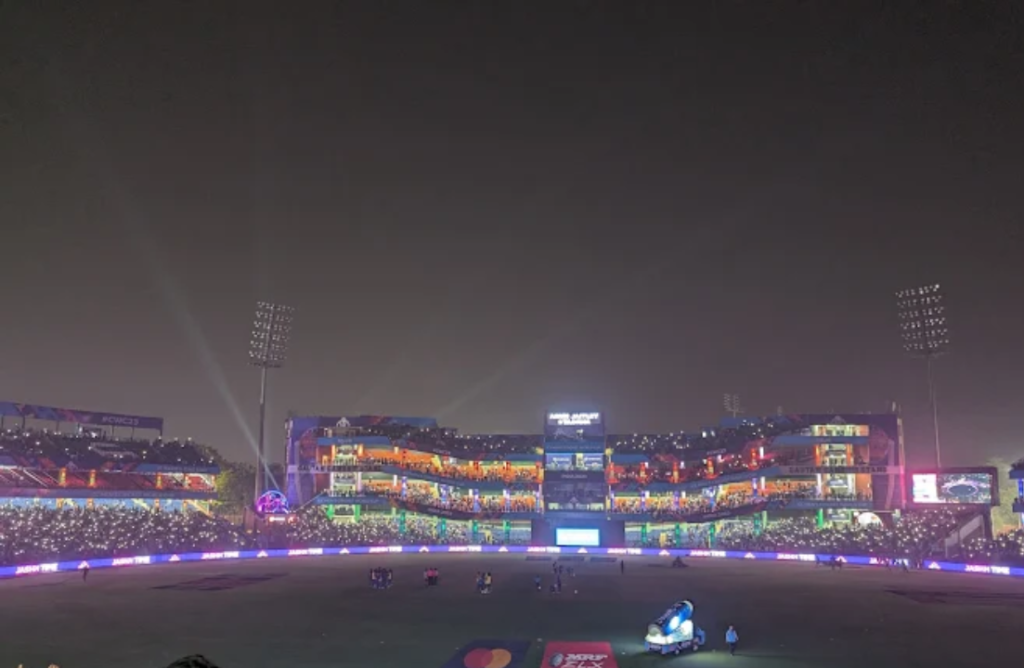
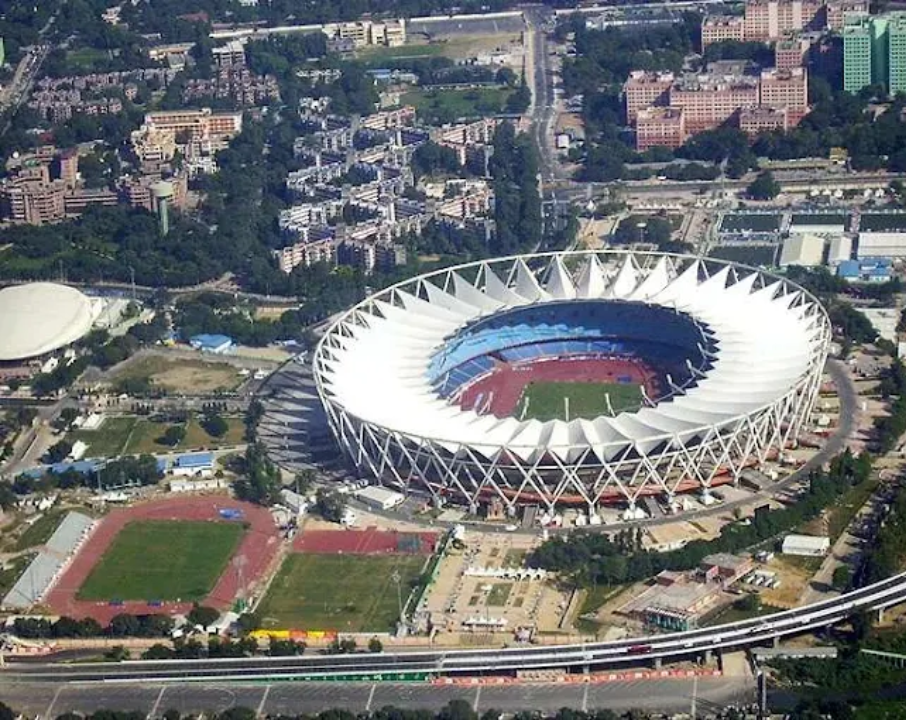
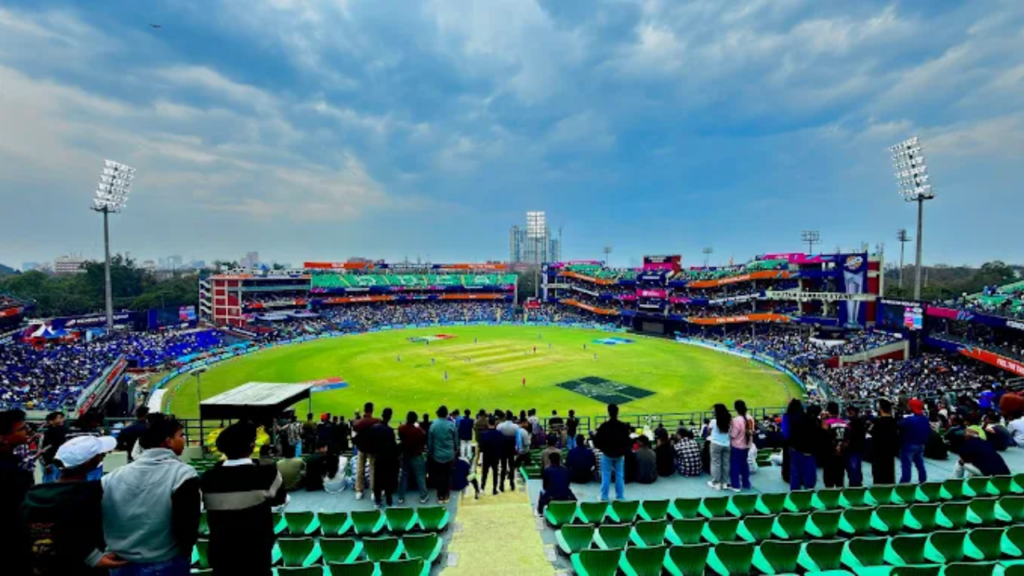
Wankhede Stadium Photos
Arun Jaitley Stadium vs Other IPL Venues (2026 Comparison)
| Stadium | Pitch Nature | Avg T20 Score | Key Characteristic | Chasing Advantage |
| Arun Jaitley Stadium | Balanced, spin-friendly | 175 | Spin dominates later overs | Low (42%) |
| Wankhede Stadium | Batting-friendly | 188 | Fast outfield, true bounce | Moderate (54%) |
| M. Chinnaswamy Stadium | Very batting-friendly | 181 | Short boundaries, altitude | High (57%) |
| MA Chidambaram Stadium | Spin-heavy | 165 | Turning track, slow surface | Low (40%) |
| Narendra Modi Stadium | Balanced | 168 | Large ground, slow outfield | Medium (48%) |
Weather and Best Playing Conditions
The cricket played at the Arun Jaitley Stadium is often shaped by the most defining of Delhi’s many weather elements. It’s extremely hot in April and May, the most intense months for the IPL, with temperatures frequently striking between 38°C to 43°C at noon meetings. The pacers are affected too, but this heat causes the pitch to wear much faster than at most other IPL venues, with its direct implication on a spin-friendly second-innings character.
There is a little temperature drop in the evening sessions, as well as light dew may set in during the final overs of night games. The moisture in the air softens the ball up, crucial to making it harder for spinners to grip their deliveries, and it’s the main reason why teams chasing can prolong matches that conditions underfoot might render futile. It is during that particular time of the year – October post-monsoon and up to December at the most – when you get superb conditions both for spectators watching Test matches morning/ evening as well as the behaviour of the pitch, aided with genuinely competitive cricket between bat and ball.
Location of Arun Jaitley Stadium
How to Reach Arun Jaitley Stadium
| Mode of Transport | Details |
| Nearest Metro | Delhi Gate Station (Violet Line) – 5-10 min walk |
| By Road | Bahadur Shah Zafar Marg; accessible from ITO, Delhi Gate, and the central Delhi road network |
| By Rail | New Delhi Railway Station – approximately 5 km |
| By Air | Indira Gandhi International Airport – approximately 20 km via NH-48 |
| Parking | Limited at the venue; public transport is strongly recommended on match days |
Conclusion
Indian cricket’s oldest and most storied venues, the Arun Jaitley Stadium is a ground that has been in Delhi for over 140 years and doesn’t look like it ever will stop being relevant. From Kumble’s 10-wicket haul in 1999 to Rishabh Pant’s explosive IPL innings and Delhi Capitals’ high octane home games in a few years time, this is where history collides with modern cricket within the same boundary rope.
The spin-friendly surfaces, the cosmopolitan crowd; to see every game played there sounds as significant as something only cricket’s oldest and most important venues boast.
Frequently Asked Questions (FAQs)
1. What was Arun Jaitley Stadium previously called?
Formerly known as Feroz Shah Kotla Stadium, it was renamed the Arun Jaitley Stadium in 2019 after Arun Jaitley.
2. What is the seating capacity of Arun Jaitley Stadium?
The stadium is capable of holding about 41,820 fans.
3. What is the best individual performance at the stadium?
That was back before Anil Kumble’s match figures of 10/74 against Pakistan in 1999 were still the rawest diamond gem that the venue has to offer.
4. What will you want to do after winning the toss, Bat first or bowl?
Most teams elect to bat first as the pitch gets slower, and the chase is also difficult at this venue.
5. What is the nearest metro station to Arun Jaitley Stadium?
The closest metro station is the Delhi Gate Metro Station, lying so close that it takes 5-10 minutes to reach it walk from here on the Violet Line.